 About nutrients
 All nutrients
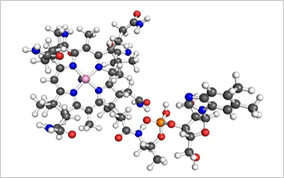 vitamins
 minerals
 phytochemicals
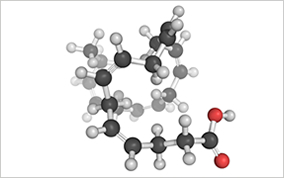 fatty acids
 macronutrients
 amino acids
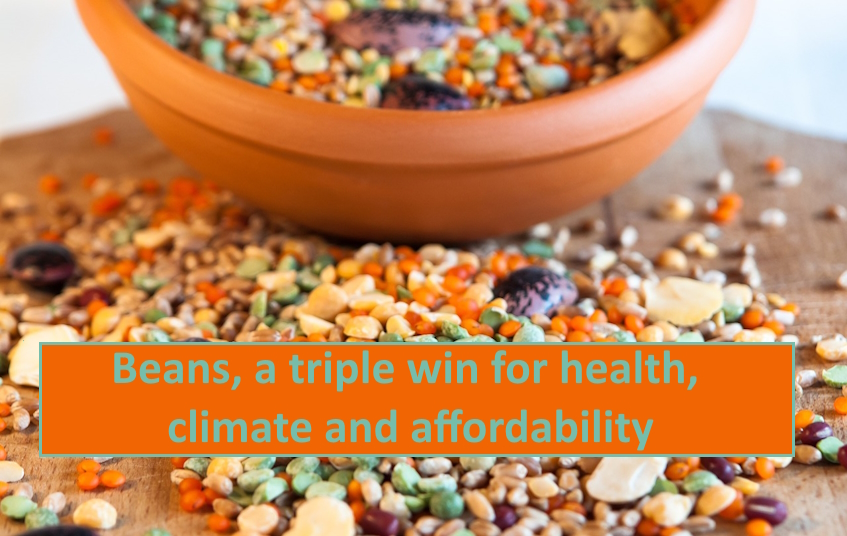
Beans are a triple win for health, climate and affordability
Bang in some Beans the new initiative from the Food Foundation
Share
Bang in some Beans is a new initiative from the Food Foundation, supported by celebrity chefs Jamie Oliver, Hugh Fearnley‑Whittingstall and Tom Kerridge
Beans are a Superfood
A real-life ‘superfood’, beans are a triple win for health, climate and affordability and are a rare example of a food that pretty much everyone can agree delivers on multiple fronts.Yet although the majority of Brits know beans are good for them, average intake remains low at just one portion a week.
Large health organisations such as The British Heart Foundation, World Cancer Research Fund (WCRF) and Diabetes UK all promote the consumption of beans as part of a healthy diet that lowers the risk of developing diet related diseases.
And certainly, beans are the common denominator in many healthy eating patterns as well as diets designed for those with specific nutritional needs, including the Mediterranean style of eating and lower-glycemic-index (GI) diets.
Why should we eat beans
A poor diet is now the biggest risk factor for death and disability globally, with four out of the five top risk factors for death and disability in the UK now diet-related.Beans are little nutrient powerhouses with a large number of health and nutrition benefits: Beans, beans good for your heart...
Diets high in beans are routinely associated with a number of health and nutrition benefits:
• Beans can count as up to one portion (80g) of your 5-a-day of health benefits.
They are naturally low in salt, saturated fat and are cholesterol free
• They are a rich source of fibre, which offers numerous health benefits including healthy digestion and a reduced risk of several chronic diseases
• They are a good source of protein, and one of the few plant foods that provides significant amounts of the essential amino acid lysine, which amongst other functions plays a key role in supporting with calcium absorption and collagen formation
• They are a good source of several vitamins and minerals including iron, potassium, phosphorus, manganese, magnesium, folate and zinc, which help to support the normal functioning of the immune system and other essential biological processes
Beans help with Nutrient, Micronutrient and Fibre intake
Analysis of data in the UK found that diets higher in pulses and other legumes are associated with better nutrient intakes overall, with higher micronutrient and dietary fibre intakes and lower total fats, saturated fats and free sugar intake Consumption of pulses and legumes among adults is also linked to significantly higher intakes of vitamins E and C, vitamin B1, folate, biotin, potassium, phosphorus, magnesium, iron, zinc and manganese.A large body of evidence suggests that diets that include beans can reduce cholesterol and the risk of both heart disease and type two diabetes.
The high fibre and resistant starch content of beans means that they are a low gylcaemic index food, with clinical studies consistently finding that pulses can lower blood glucose and insulin levels and decrease the risk of developing type two diabetes.
In terms of heart disease risk, beans are thought to reduce the risk of heart disease by improving blood pressure, lipid profile, insulin levels and body weight. When eaten regularly, beans can therefore contribute to reduced risk of mortality because of their protective benefits against these diet-related diseases and some types of cancer.
How much should we eat?
The government recommends adults eat 30g of fibre a day yet virtually no one is meeting this recommendation There is strong evidence that eating foods containing dietary fibre decreases the risk of colorectal cancer, with many cancer charities recommending we eat fibre rich diets and decrease the amount of processed meat as a result.Beans are good for the environment
Beans have a vastly smaller carbon footprint relative to animal foods. This is largely due to the fact that livestock have much higher resource requirements than plant foods, using more land, water and energy.Beans are an affordable alternative to meat when money is tight
Analysis of 71 meat alternatives available to buy from UK supermarkets undertaken in 2024 by the Food Foundation found that beans are the most affordable plant-based alternative to meat by quite some way.Beans cost on average 4.5 times less per 100g than other plant-based alternatives and were the only type of plant based alternative costing less than meat.
Beans cost 2.6 times less per 100g than meat. In contrast, more processed plant based alternatives to meat were more expensive than meat products, with processed (new generation) alternative brands such as Beyond Meat are on average 73% more expensive per 100g than meat products, while traditional processed meat alternatives such as tofu and tempeh were on average 38% more expensive.
This is a snapshot of the report on beans from the Food foundation, to read the whole report Click here and here

Love this? Get blogs and more in your inbox
Subscribe to receive our blogs plus each weeks featured ingredient, recipe and nutrient in your inbox
Thank you for registering




The personalised nutrition platform for health hungry people